
One of the most effective digital marketing strategies for companies is Facebook advertising. It has enormous potential to generate leads, improve traffic, and boost revenue thanks to its billions of active users and effective targeting possibilities.
However, even after spending money on marketing, many companies leave their customers disappointed. They pay money for advertisements, receive a few clicks, and possibly even a few likes, but they receive little to no genuine return. What then goes wrong?
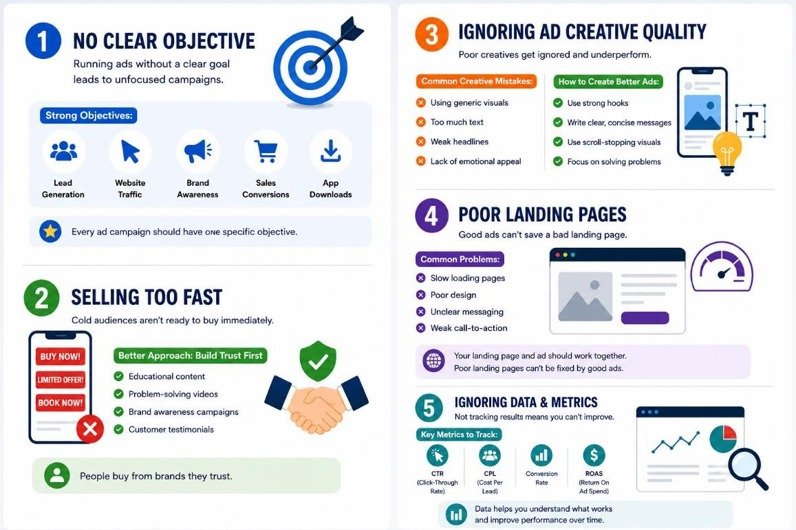
They Begin Without a Clear Objective
Launching advertisements without a clear goal is one of the most common blunders made by organizations.
Typical issue:
Let’s run ads and observe the results. Why this doesn’t work:
Campaigns lose focus when they lack an objective.
Strong advertising goals consist of:
- The production of leads
- Traffic to websites
- Knowledge of the brand
- Conversions of sales
- App Every advertising strategy should have a unique objective.
- They concentrate on Selling Too Fast Many companies produce advertisements that generate revenue immediately.
- For instance: “Purchase now!” “Limited offer!” “Make your reservation now!”
The Issue:
Cold viewers are not prepared to make a quick purchase. An improved approach
Establish trust first by:
- Instructional materials
- Videos that solve problems
- Campaigns to raise brand recognition
- Testimonials: Consumers purchase products from reliable
- They Disregard the Creative Quality of Ads
- Facebook is a platform showcasing visual content. Poor graphics frequently run a performance.
Typical errors in creativity:
- Generic visuals
- Excessive text
- Poor headlines
- There is no emotional appeal
Improved advertising creative consists of:
- Robust hooks
- Transparent messaging
- Visuals that stop scrolling
- Emphasis on problem-solving: Engagement is impacted by creative
Their landing pages are inadequate.
When the website is the real issue, many companies place blame on advertisements.
Typical problems:
- Pages that load slowly
- Inadequate design
- Messages that are unclear
- A feeble call to action
Actuality:
- Poor landing pages cannot be saved by good marketing.
- Your landing page and advertisement should complement each other.
- Metrics & Data Are Ignored
- Many companies start campaigns but never evaluate the outcomes.
Among the crucial metrics are:
- CTR, or click-through rate
- CPL, or cost per lead
- The rate of conversion
- ROAS, or return on ad expenditure
Performance is gradually improved with the use of data.
They anticipate quick outcomes.
Facebook advertising doesn’t work like magic.
Typical expectation:
Run advertisements now, make sales tomorrow.
Actuality:
Effective campaigns frequently need:
-
- Examining
- Enhancement
- Learning from the audience
- Patience is important.
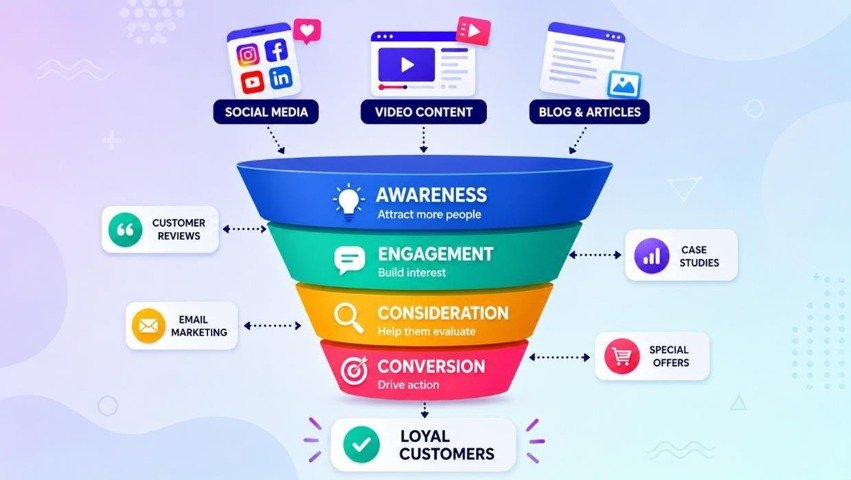
The Reasons Behind the Failure of Conventional Funnels
The Innovative Stack That Succeeds
Instead of creating discrete advertisements, high-performing brands use innovative systems.
| The Creative Type: | Purpose | Why It Works |
| Videos created by users that are camera explainers | Trust | Reliable seems relatable and
genuine |
| camera explainers | Authority | Fosters human connection |
| Testimonials | Confirmation | Lowers the perceived risk |
| Visual storytelling | Emotion | Through boosts memory |
| Static or carousel | Clarity | Advertising makes comparisons easier |
This diversity allows platforms to match the right creative to the right moment of intent.
In the first 3 seconds, curiosity surpasses knowledge.
Before the message even starts, the majority of advertisements fail. Curiosity comes first, clarity comes second, and persuasion comes last for successful creatives.
Hooks that work:
Present an issue without providing an explanation.
- Emphasize a relatable tension
- Tease a result without disclosing it
- Watching time is increased by
- Relevance signals rise with the watch
- Reach is increased by
Why Offers Still Matter (But Only When Framed Right)
Offers alone don’t sell anymore context does High-performing campaigns often anchor around:
- Low-risk access points
- First-time incentives
- Clear value framing
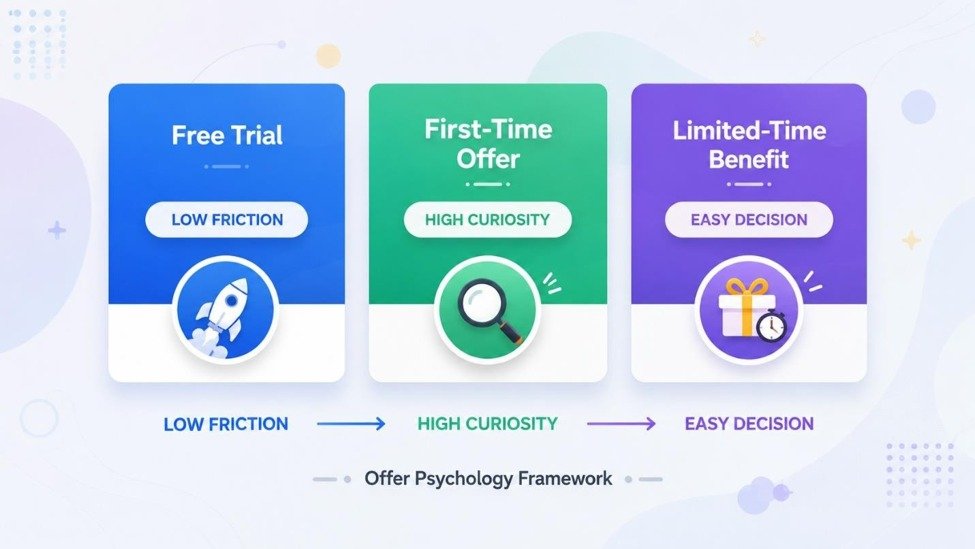
Reducing hesitancy is the aim, not discounting. Decision friction decreases when people grasp the offer immediately.
Shopping by comparison is the norm.
“Is this good?” is no longer a question from customers. “Is this better?” they inquire.
Social proof, visual search, and AI technologies make comparison instantaneous. This modifies the format of advertisements.
Rather than describing features, advertisements ought to:
- Emphasize differentiators
- Resolve typical objections
- Frame value in comparison to other options
This change in behavior also explains why LinkedIn advertising is more expensive: consumers on professional networks are more intent-driven, comparison-heavy, and near to making a purchase, which increases auction competition.
Selling Takes Place Within Platforms, Not Following Clicks
The actual location of converts is one of the most frequently ignored changes. Actions are increasingly taking place on the platform:
- In-app purchases
- Direct communications
- Saved information
- Filling out the form
Retention is rewarded by platforms. Wider dissemination is given to content that retains consumers within the ecosystem.
How Companies Should Reconsider Facebook Advertising in 2026
Facebook advertising is viewed by winning brands as:
- The use of discovery engines
- Accelerators of trust
- Innovative testing facilities
- not merely tools for
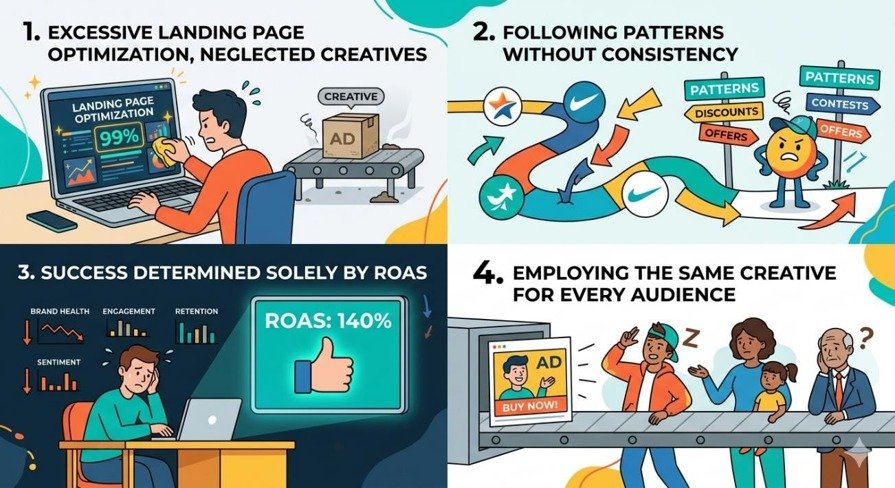
Instead of focusing on adjustments, they devote more resources to creative development Typical Errors That Brands Continue to Make Optimizing landing pages excessively while neglecting creatives Following patterns without establishing consistencyUsing ROAS alone to gauge successEmploying the same creative approach for every audience
What to Construct Instead
Brands ought to concentrate on:
- Innovative systems
- Modular messaging
- Storytelling that is native to the platform
- Long-term loops of trust
- This is the compounding effect of modern
Typical Errors That Brands Continue to Make:
- Optimizing landing pages excessively while neglecting creatives
- Following patterns without establishing consistency
- Success is solely determined by
- Employing the same creative approach for every audience
FAQs
1. Do Facebook advertisements still work in 2026?
Yes, but only if creatives align with platform behavior and patterns of discovery.
2. Are funnels still important?
Conceptually, funnels exist, but purchasing decisions are made across ecosystems rather than steps.
3. Is targeting no longer crucial?
While creative relevance has a bigger effect on efficiency, targeting is still important.
4. Should companies prioritize video over static advertisements?
Both are important. Diverse formats enable platforms to more efficiently maximize delivery.
Conclusion
In 2026, persuading customers to buy is no longer the goal of selling. Meeting them at the point of discovery, easing tension before reluctance develops, and gaining their trust before intent is made clear are all important. Companies that embrace this fact give up on short-term strategies and begin developing systems that reflect people’s true decision-making processes. Monitoring helped conversions, interaction quality, and sustained brand lift.